He’s got a lust for life that doesn’t seem to have an off switch, an energy that’s flat-out infectious, like a kid who just found the one present under the tree he’d actually been hoping for. Except that’s not a Christmas morning thing for him. That’s a Tuesday.
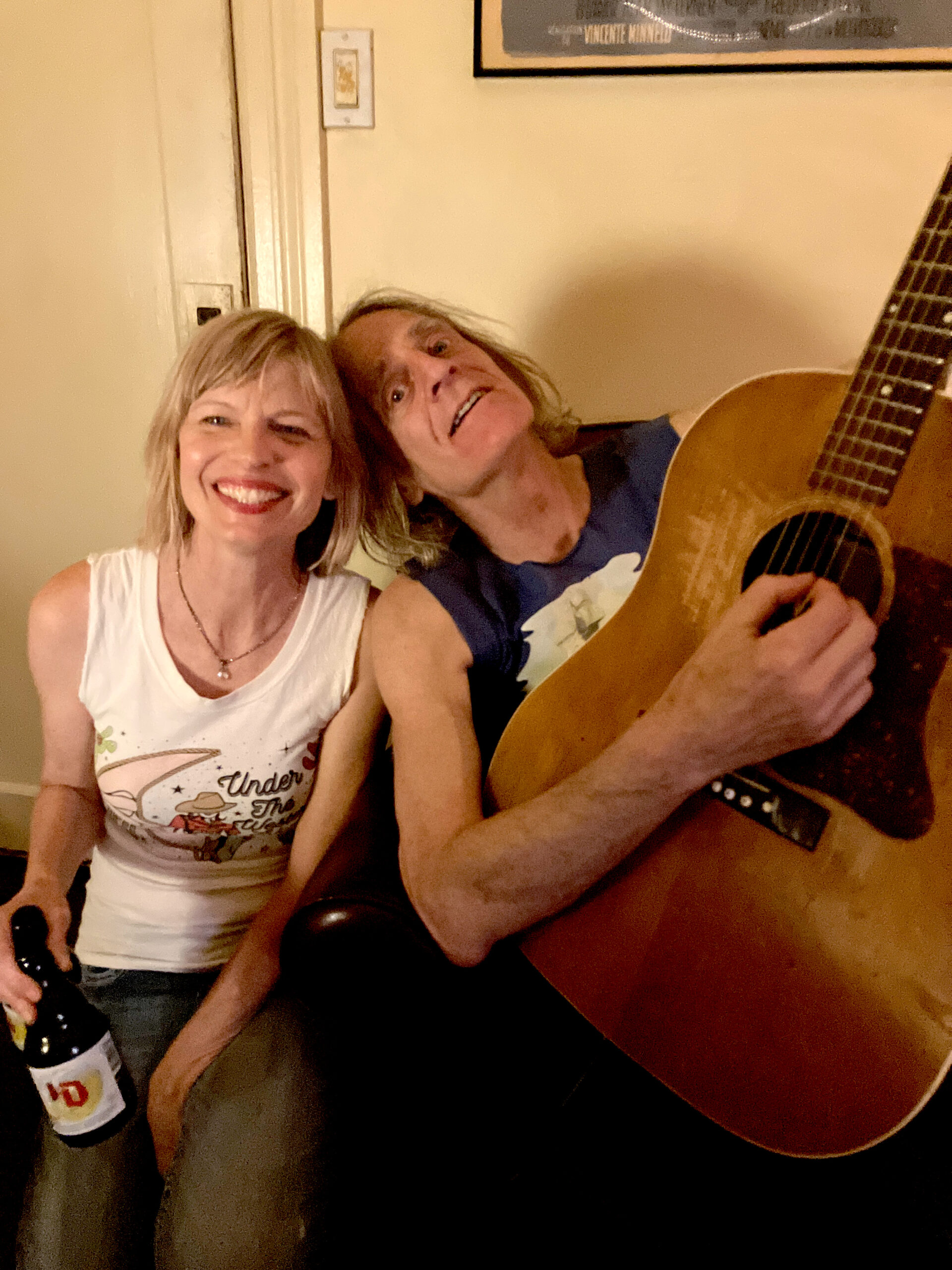
It took me a while to piece together why THIS guy and that guitar was sitting in a Bay Area bar and not, say, headlining somewhere. Turns out he’s been headlining somewhere — just not here, and not for a while – though I managed to catch him with Psycotic Pineapple at the Ivy Room last year and Hotel Utah with his combo, The Alex Carlin Triad this year.
Alex Carlin has been paying dues since before most of us were born, and the receipts span five decades, three continents, and a Guinness World Record. This is his story, or at least the parts of it that fit on a page.
Berkeley, Fifth Grade
Carlin was born in Chicago in 1957, and his family landed in the Berkeley hills around 1964.
The origin story is almost too on-the-nose for a kid who’d grow up to make a career out of rock and roll: in 1967, in fifth grade at Cragmont Elementary, he and classmate Jon Rubin started a band called
The Constipated Orange
.
It was band named after a joke — a satirical jab at the psychedelic acts of the day, the Electric Prunes and Strawberry Alarm Clock types — but the partnership with Rubin stuck around a lot longer than the joke did.
The Rubinoos
By 1970, that same partnership had turned into something real.
Carlin playing a cheap Italian organ, was a founding member of The Rubinoos alongside Jon Rubin, Tommy Dunbar, Greg “Curly” Keranen, Ralph Granich and Danny Wood — melodic, hook-heavy, unmistakably indebted to the British Invasion.
He co-wrote Rock and Roll Is Dead (And We Don’t Care), the song the Rubinoos played on American Bandstand, and was recently featured on HBO FRANCE’s Irma Vep movie.
Carlin’s run with the band was brief — a year, maybe two — but it’s the kind of credit that tells you he was in the room early, doing real work, before almost anyone in the East Bay scene had a name for what they were doing.
Psycotic Pineapple and the Berkeley Punk Years
By the late ’70s Carlin had moved from power-pop into the noisier, faster world of Berkeley punk with Psycotic Pineapple.
He found a songwriting partner in bassist John Seabury — a Grammy-nominated illustrator as well as a musician — and together they wrote live staples like I Forgot Who I Was. This was the era of shared bills with the Dead Kennedys, Jonathan Richman, Roky Erickson — the East Bay’s version of a proving ground, and Carlin was squarely in the middle of it.
- Buy music: Psycotic Pineapple
A Detour Through Hollywood
In 1984, Carlin, Dunbar, and Seabury wrote Little Demon together.
Rick Derringer produced it, Adrian Zmed performed it, and it landed in Bachelor Party, the Tom Hanks comedy that was tearing up theaters that year.
It’s a strange, fun footnote — a Berkeley punk guy with a songwriting credit in a mainstream studio comedy — and it’s the kind of thing that could have pulled a lesser artist toward chasing more placements, more polish, more of the industry’s version of success. Carlin went the other direction.
ALIEN BEACH HEAD
This is the part of the story that started this article, because it’s the part that almost no one has documentation for.
In the late 1980s Carlin on guitar and vocal founded Alien Beach Head together with
Bill MacBeath
on bass and vocal, and Peter Ffrench on drums.
Where his earlier bands had chased studio releases, Alien Beach Head deliberately didn’t — no formal albums, nothing commercial, nothing meant to sit on a record store shelf. Whatever they left behind exists almost entirely as word of mouth and whatever tape happened to be running.
Before the band’s story goes international, they were a working Bay Area act. In 1989 they played an International Women’s Day “Rock Against Racism” benefit at The Beach House, sharing the bill with the psych-funk outfit Psychefunkapus — a snapshot of a band still rooted in the scene that raised it.
Then, in 1990, they did something that has basically no equivalent in the East Bay punk catalog: a six-month tour across the entire Soviet Union, months before it stopped being the Soviet Union.
The route alone is hard to fathom — starting in Odessa and Kiev, cutting through the Urals and Siberia, reaching all the way to Transbaikalia near the Mongolian border, then looping back through Moscow and Leningrad.
It’s the kind of tour that doesn’t really exist as a concept anymore, logistically or geopolitically. It also set the hook that would define the rest of Carlin’s career: a permanent, genuine connection to Russia and Eastern Europe that no amount of time back in California ever loosened.
The cassette tapes that prompted this whole piece — the ones digitized for this article — are from this era. Alien Beach Head never left a commercial footprint on purpose, which makes whatever tape survives from that Soviet tour and the years around it a genuinely rare document, not just a nostalgic curiosity.
- Buy music: You can’t… YET
Krakow, Rüt Höst, and 32 Hours Straight
In 2000, he formed a new band called Rüt Höst based in Amsterdam, then Budapest, then for many years Krakow.
Core members were Peter Ffrench and J.R. Clegg on bass. Fast Mike was a founding member as a co-songwriter and wild dancer, Jeff “Buffalo” Jirout for a while on second guitar, and the famous fusion drummer Atma Anur — known for his work with Journey — played many gigs when Peter was in the USA.
Alex proceeded to play over 100 shows a year all over Europe for the next decade, with the band or solo, which is a touring pace most musicians half their age can’t sustain.
Then, in June 2009, in Radomsko, Poland, Carlin set the Guinness World Record for Longest Solo Concert: 32 straight hours of classic rock and roll, one man, no relief. It’s a ridiculous, almost cartoonish feat of endurance — and if you’ve met the guy, it tracks completely. That much energy has to go somewhere.
The Alex Carlin Band
Since 2012, Carlin has fronted the Russia-based Alex Carlin Band.
Founded with drummer Denis Matuizo and joined by a parade of NINE bass players, two of whom died violently tragic deaths, so stand back Spinal Tap with those exploding drummers. They have recorded 3 CDs.
He still tours at a pace that would flatten most working musicians — 100-plus shows a year, most of it covered by train, crisscrossing Russia, Eastern Europe, and the Central Asian republics.
Along the way there’s been an impromptu duet with Steven Tyler in 2012, and a 2006 recording of his original “No Sleep, Only Rock and Roll” featuring Scorpions bassist Paweł Mąciwoda — the kind of credits that would be a career highlight for most people and are, for Carlin, just part of the itinerary.
There’s also a side of Carlin that doesn’t show up on a setlist. He holds a UC Berkeley degree in Russian Literature, and he’s used it — working as a foreign correspondent on environmental issues, writing music about ocean health, and presenting climate restoration proposals at UN conferences. It’s not the first thing you’d guess about a guy who once played guitar for 32 hours straight, but it fits the pattern: whatever Alex Carlin decides to commit to, he commits to completely.
- Buy Music: The Alex Carlin Band
The Missing Link
Fifty-some years on from a band named after a fifth-grade joke in the Berkeley hills, Carlin’s still doing the same essential thing — writing songs, playing them loud, and refusing to slow down for anyone.
Alien Beach Head is the piece of that timeline almost nobody’s seen documented: a band that toured the collapsing Soviet Union on principle, left behind almost nothing on purpose, and set the course for everything Carlin’s done since.
These tapes fill in that gap. And having met the guy — having seen firsthand that his reputation for restless, unstoppable energy is not remotely exaggerated — it feels right that the record finally gets a little more complete.
I’m not sure what he plans to do with them, but if he releases them to the public, I’ll definitely let you know… so stick around.
Support the Artist
Alex Carlin
In the meantime, show your support for this living legend by listening to and buying his music! Or come to a show and buy some vinyl and merch.
Alex In Russia Land
This is Alex’s feature film released to the public a few years ago at select theaters. Alex has graciously offered the full movie to anyone who wants to see it, if you simply
email him
.
We had this fantastic successful showing at the wonderful ROXIE THEATER in the Mission District in SF on October 18, 2021. And Mick LaSalle wrote this great blurb (see link below) one year later promo-ing a screening in Oakland at the Paul Dresher Studio.
Alex Carlin
As Tensions with Russia worsen, ‘Alex in RussiaLand’ plays in Oakland
THE MOVIE WAS SCREENED AT THE FOLLOWING LOCATIONS (ARCHIVAL)
- Sochi International Film Festival, Russia, February 21, 2021
- Asian World Film Festival, Los Angeles, California, USA, March 11, 2021
- St. Petersburg White Nights Festival, Russia, April 24, 2021
- Votkinsk International Film Festival, Russia, May 14, 2021
- Kiev International Film Festival, Ukraine, May 21, 2021
- Nadym International Film Festival, Russia, May 23, 2021
- Maykop International Film Festival, Maykop, Russia, July 18, 2021
- Silicon Beach Film Festival, Grauman’s Chinese Theater, Hollywood, California, USA, October 1, 2021
- Roxie Cinema, San Franciso, California, USA, October 18th, 2021
- Silver State Film Festival, Las Vegas, Nevada, USA, October 31st, 2021
- Moscow Lights Film Festival, Moscow, Russia, December 25, 2021
- Film Noir Cinema, Brooklyn, New York, USA, February 12, 2022
- Dresher Ensemble Studio, Oakland, CA, 7pm, Saturday, February 19, 2022
References
Biography & Features
-
Alex Carlin – Wikipedia Entry
-
Greg “Curly” Keranen – Wikipedia Entry
-
The Rubinoos – Wikipedia Entry
-
Berkeley Musician Alex Carlin in Russia – Berkeleyside (2022)
-
The It List: Things to Do in Berkeley – Berkeleyside (2019)
-
Age Is No Limit Performance – TEDxKazimierz
-
Alex Carlin Feature – Krakow Post (2009)
Discography & Official Sites
- Alex Carlin Band website (Russian)
-
The Rubinoos – Official Website
-
Alex Carlin Discography – Discogs
-
Greg Keranen Discography – Discogs
-
Psycotic Pineapple Discography – Discogs
-
Soundtrack Credits – IMDb
- Psycotic Pineapple Bandcamp page
- Psycotic Pineapple Facebook page
- Psycotic Pineapple “Where’s The Party?”
I’ve known Alex for only a short time, and I know he’s had a long and storied career, so I had to lean heavily on the Internet to fill the gaps in my knowledge – of which there were many.
Corrections
I did indeed make some editorial mistakes, though most of it still stands. I spoke with Alex via text and email, and corrected them. This page was corrected at 5:45PM PST July 28, 2026. If you read it before then, my apologies for a few wrong and omitted details.

Logan Byrne
Eric Din in the Court of Doubt
Richmond, CA—A few months back, Eric Roy Dinwiddie came by the studio to contribute a track to The Pub Album.
A collaborative compilation. He didn’t bring a polished demo or a tight arrangement plan. He brought a quirky original song, four friends he’d recruited as backup singers, and an afternoon’s worth of good humor.
The song is called In the Court of the King and Queen of Doubt. It’s not released yet, but it’s one of my favorite sessions we’ve tracked here, and it says a lot about who Eric is as a musician.
The Session
The tune sits somewhere between lounge music and Frank Zappa, with a healthy dose of Monty Python absurdism and a little Dada thrown in for good measure.
Drew Murray played drums. Bill MacBeath played upright bass — and then, mid-session, ran home to grab his marimba because the song needed it. That’s the kind of day it was.
SPLENDID
The four friends Eric brought weren’t there to sing harmony in the traditional sense. They mooed. They clucked. They made snide asides over the top of the track, and Eric welcomed all of it. When a take wrapped and the room settled, his verdict was simple: “Splendid.”
We got it in a handful of live takes with some overdubs layered on top, and then, just like that, everyone packed up and went home. No fuss, no second-guessing. That’s a specific kind of skill — knowing when a song is done and trusting the room to get you there. It’s also exactly the kind of session Panama Sound was built for: an untreated, character-filled space where a marimba run home to fetch mid-afternoon doesn’t feel like a disruption, it feels like the song asking for what it needs.
We’ll let you know when “In the Court of the King and Queen of Doubt” is out in the world. It deserves to be heard.
Who Eric Din Is
If the name rings a bell, it might be from the 1980s Berkeley ska scene. Eric Roy Dinwiddie — known for decades as Eric Din — co-founded The UpTones in 1981 while still in high school.
The band became a fixture at Berkeley Square and other East Bay venues, and helped set the stage for the ska-punk wave that broke nationally in the late ’80s and ’90s.
The “Din” name itself has a mundane origin story that Eric tells with the same dry humor that runs through his songwriting: while doing repair work at Subway Guitars in Berkeley, he shortened his last name on repair tickets to avoid confusion with a coworker who shared his initials. It stuck. In recent years, he’s returned to using his full name, Eric Roy Dinwiddie, on new solo work — a nod to his own roots.
The Solo Catalog
Eric’s solo material, released through his label Berkeley Cat Records, is mostly self-produced out of his home studio — he handles the songwriting, instrumentation, engineering, and mixing himself.
That DIY approach gives the records a loose, unfiltered quality that fits the songs, which range from ska and reggae-rock into synth-pop, schlager, and satirical spoken pieces.
A few places to start:
This Worldly World (2025)
A satirical look at digital-age fatigue and existential drift, delivered with hyper-catchy arrangements. The title track sets the tone, and “Me And The Little This Is Fine Fire Doggie” turns internet-era burnout into something genuinely funny and painfully accurate.
Street Party and CONTENT
Two full-lengths that balance lighthearted hooks with an undercurrent of cynicism. “Content, Content, Content” pokes at the pressure on artists to constantly feed the algorithm, while “Jupiter Girls” leans into playful, outer-space ska-pop.
Genre-bending cuts
“Much Better” features cover art from Bay Area cartoonist Shannon Wheeler, and “A Cat Named Paw” is a layered, home-studio love letter to a cat, produced with the same craft as anything he’s put out.
There’s also Berkeley Cat Records’ archival work — restored UpTones material transferred from 24-track analog tape, including In the Studio 1987, mixed and released decades after it was recorded at Music Annex in Menlo Park.
Where to Find It
- Bandcamp: ericdin.bandcamp.com and ericroydinwiddie.bandcamp.com — the most direct way to support the work, whether digital or physical.
- Streaming: Apple Music, Spotify, and YouTube, under Eric Din, Eric Roy Dinwiddie, and Berkeley Cat Records.
- Merch: shirts, totes, and mugs through the Berkeley Cat Records website.
- PodCats: for something different, Everything Is Stupod and Storytime with Din are spoken-word projects hosted on the Berkeley Cat site.
Thanks for spending a day with us, Eric. We’ll be first in line when “In the Court of the King and Queen of Doubt” finally sees daylight.
Logan Byrne
Arhoolie, Down Home Music
Richmond, CA—The Field Holler that won't quit: Chris Strachwitz, Arhoolie, Down Home Music, and a Building Worth Saving.
A five-minute walk from Panama Sound, on the seam where El Cerrito’s sidewalk meets Richmond’s street address, sits a building that has quietly done more for American vernacular music than almost anywhere else on the West Coast.
For fifty years it has held a record store, a record label, and a film company under one roof, and for the last two years it very nearly didn’t survive its founder’s death. This is the story of how it got there, who built it, and why it’s still worth a visit — or a drive, or a plane ticket — today.
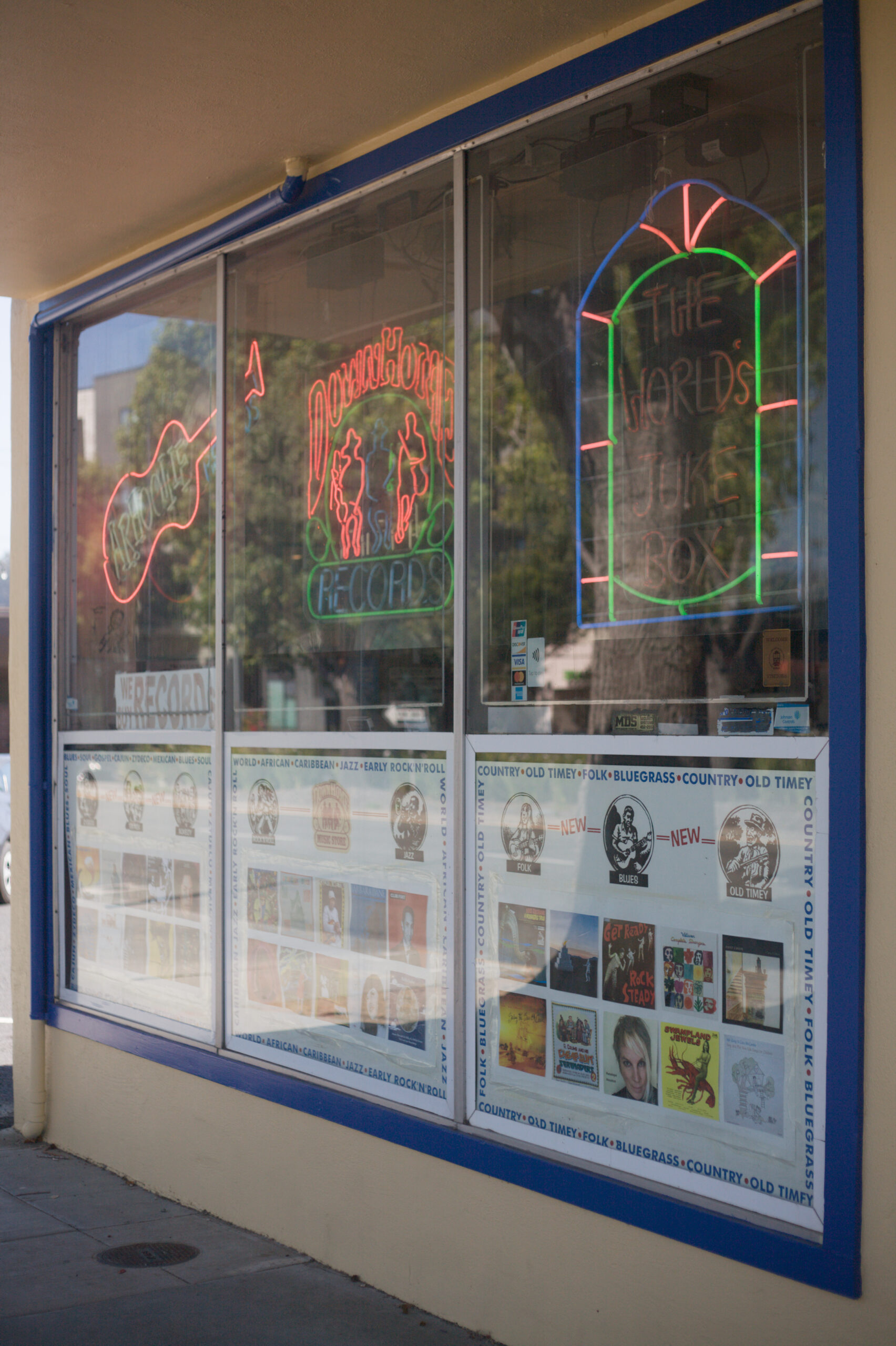 The Downhome Records storefront.
Christian Alexander Maria Strachwitz was born in 1931 in Gross Reichenau, a village in Lower Silesia then part of Germany, into an aristocratic farming family that lost everything when the region became part of postwar Poland.
He arrived in the United States as a teenager in 1947, and by his own account it was a chance encounter with a Lightnin’ Hopkins record that rewired his adolescence and, eventually, his career. He studied at Pomona College, taught high school for a stretch, and spent every spare hour chasing regional music at clubs, dance halls, and back porches.
In the summer of 1960 he made his first serious field-recording trip through Texas, Louisiana, and Mississippi, and that trip produced Arhoolie’s first release: a Texas songster named Mance Lipscomb, captured with the help of folklorist Mack McCormick, who also coined the label’s name from a regional term for a field holler.
Strachwitz left teaching in 1962 to run the label full-time, and in 1965 he began hosting a long-running Sunday program on Berkeley’s Pacifica station KPFA that stayed on the air for three decades.
That same year, a chance introduction to a young Berkeley folksinger named Country Joe McDonald led to a no-charge living-room recording session that yielded an anti-war anthem later immortalized at Woodstock — the royalties from which helped fund Strachwitz’s purchase of a building on San Pablo Avenue in the mid-1970s, which became Arhoolie’s headquarters and, from 1975 onward, the Down Home Music store.
In 1995 he founded the nonprofit Arhoolie Foundation to house and preserve his archives, and in 2016, at 85, he sold the Arhoolie label’s catalog to Smithsonian Folkways, which continues to distribute it worldwide. Chris Strachwitz died on May 5, 2023, at 91, having spent more than six decades as one of the most consequential independent record men in American history.
What makes Arhoolie’s catalog remarkable isn’t just its size — more than 350 albums across six decades
— but its refusal to specialize. Strachwitz’s ear moved fluidly between deep Texas blues, Louisiana Cajun and zydeco, Tejano and norteño conjunto, Appalachian old-time, gospel steel guitar, and Balkan-American brass, treating all of it as equally worth preserving.
The blues wing alone reads like a syllabus: Lightnin’ Hopkins, whom Strachwitz first recorded in 1959; Mance Lipscomb; Mississippi Fred McDowell, whose “You Got to Move” was later covered by the Rolling Stones on Sticky Fingers; Big Mama Thornton; Big Joe Williams; Robert Pete Williams; Juke Boy Bonner; Lil’ Son Jackson; the Black Ace (B.K. Turner); pianist Alex Moore; Texas songster and pianist Robert Shaw; and the singular one-man-band percussionist Bongo Joe Coleman, recorded on the streets of San Antonio.
On the Louisiana side, Clifton Chenier — the self-styled “King of Zydeco” — anchored a roster that included his son C.J. Chenier, Amede Ardoin, Alphonse “Bois Sec” Ardoin and his sons, fiddler Canray Fontenot, John Delafose, and the Sam Brothers Five.
Arhoolie’s Tejano and norteño catalog grew enormously in 1990 when Strachwitz purchased the masters of Ideal Records, bringing in Lydia Mendoza, Chelo Silva, Carmen y Laura, conjunto pioneer Narciso Martínez, orquesta bandleader Beto Villa, accordionist Valerio Longoria, Flaco Jiménez, Santiago Jiménez Jr., and groups like Los Alegres de Terán and Los Pingüinos del Norte. Beyond those three pillars, the label’s reach touched Rose Maddox, Freddy Fender, Cuban percussionist Francisco Aguabella, old-time fiddler Tommy Jarrell, and — in one of the odder detours in the catalog — an early living-room recording of Country Joe McDonald himself.
Whether you know all of these names or none of them, that’s the point: Arhoolie’s mission was never chart position, it was documentation, and the sheer range of the roster is the clearest evidence of how seriously Strachwitz took that job.
Strachwitz’s closest creative partner outside the studio was Les Blank, the documentary filmmaker who moved to the Bay Area in the 1960s and spent the next five decades training his camera on American vernacular culture — music, food, and the people who made both.
Blank and Strachwitz collaborated directly on three films: Chulas Fronteras (1976), an intimate portrait of Tejano and norteño border culture built around performances by Flaco Jiménez, Lydia Mendoza, and Narciso Martínez; its companion piece Del Mero Corazón (1979); and J’ai Été au Bal (1989), a tribute to Cajun and zydeco music. Blank also made standalone documentaries on Arhoolie artists, including The Blues Accordin’ to Lightnin’ Hopkins and Hot Pepper, his profile of Clifton Chenier, and both Chulas Fronteras and Blank’s garlic documentary Garlic Is As Good As Ten Mothers were later selected for preservation in the Library of Congress’s National Film Registry.
Blank’s other lifelong creative partnership was with Werner Herzog, and it’s worth understanding how that connection sits alongside the Strachwitz story rather than folding into it directly — the two threads run parallel more than they intertwine.
Blank first turned his camera on Herzog for the short film Werner Herzog Eats His Shoe (1980), documenting Herzog making good on a wager to eat his own boot, and followed it two years later with Burden of Dreams (1982), his acclaimed making-of chronicle of Herzog’s famously grueling Fitzcarraldo shoot in the Amazon — widely regarded as one of the finest documentaries ever made about the act of filmmaking itself.
Herzog and Blank remained friends and mutual admirers for the rest of Blank’s life; Herzog later spoke on camera about his admiration for Blank’s Appalachian old-time film Spend It All.
The throughline connecting all of it is Blank himself: the same restless, unpretentious camera that captured Herzog eating a boot in Berkeley also captured Flaco Jiménez’s accordion runs on the Texas border, because to Blank they were both, in their own way, documents of people doing something with total conviction.
Strachwitz’s reputation, almost uniformly, is that of a fair dealer in a field with a long history of exploitation — folklorists and A&R men who recorded regional and Black vernacular artists for a pittance and kept the publishing for themselves.
Strachwitz went out of his way to avoid that pattern more than once: when the Rolling Stones covered Mississippi Fred McDowell’s “You Got to Move” on Sticky Fingers, Strachwitz pushed back against resistance from the band’s lawyers and secured McDowell substantial royalties while the ailing bluesman was still alive to receive them.
That said, the historical record isn’t entirely without tension. Some blues performers, wary of Arhoolie’s small, niche-market distribution, chose upfront cash payments over deferred royalties — a rational choice at the time, but one that meant they didn’t share in whatever long-term value their recordings accrued.
And the most financially significant transaction in Arhoolie’s history was, on its face, a lopsided one: Strachwitz recorded a young, then-unknown Country Joe McDonald for free in his living room in 1965, and in exchange received the publishing rights to “I-Feel-Like-I’m-Fixin’-to-Die Rag,” which went on to become a Woodstock-era anthem and effectively bankrolled the label’s growth and its eventual real estate.
Scholars examining Strachwitz’s larger body of work have also noted the basic outsider dynamic inherent in his career — a white, German-born collector of considerable means built his life’s work by documenting predominantly Black, Cajun, and Mexican-American communities — a dynamic Strachwitz himself was self-aware about, and one that shows up in academic discussions of field recording ethics more broadly.
Strachwitz was a serious 78 rpm collector before he was a record executive, and that habit metastasized over sixty years into one of the largest privately assembled recorded-sound archives in the country.
The bulk of it now lives as the Strachwitz Frontera Collection of Mexican and Mexican American Recordings, owned outright by the Arhoolie Foundation and comprising close to 170,000 individual recordings — 78s, 45s, LPs, cassettes, and unreleased reel-to-reel masters — spanning from 1905 through the 1990s, including the earliest known commercial recordings of corridos, rancheras, and norteño and conjunto music.
Rather than shipping the physical collection off to a university archive, Strachwitz and the Arhoolie Foundation struck a digitization partnership in 2001 with UCLA’s Chicano Studies Research Center, seeded by a $500,000 grant from the Los Tigres del Norte Foundation, the philanthropic arm of the Grammy-winning norteño group.
The physical 78s and related materials stayed — and still stay — at the Arhoolie Foundation’s own facility in El Cerrito, while a growing digital mirror, now well over 140,000 recordings, is hosted online by the UCLA Library in partnership with the university’s Digital Library Program.
The broader Arhoolie label catalog — the blues, Cajun, zydeco, and gospel recordings that made up the commercial label itself, as distinct from the Frontera Collection’s raw historical 78s — followed a different but complementary path in 2016, when Strachwitz sold it to Smithsonian Folkways, ensuring national distribution and long-term institutional stewardship while the foundation retained the archival materials, photographs, and unreleased tape.
If Chris Strachwitz was Down Home Music’s founder, John McCord has been its constant.
McCord has managed the store since the early 1980s — well over four decades now — co-running day-to-day operations alongside J.C. Garrett, who joined in 2003. Between them, McCord and Garrett are the reason Down Home Music has remained a functioning, browsable, staffed record store through a change in ownership, a founder’s death, and a real-estate crisis that could easily have ended it.
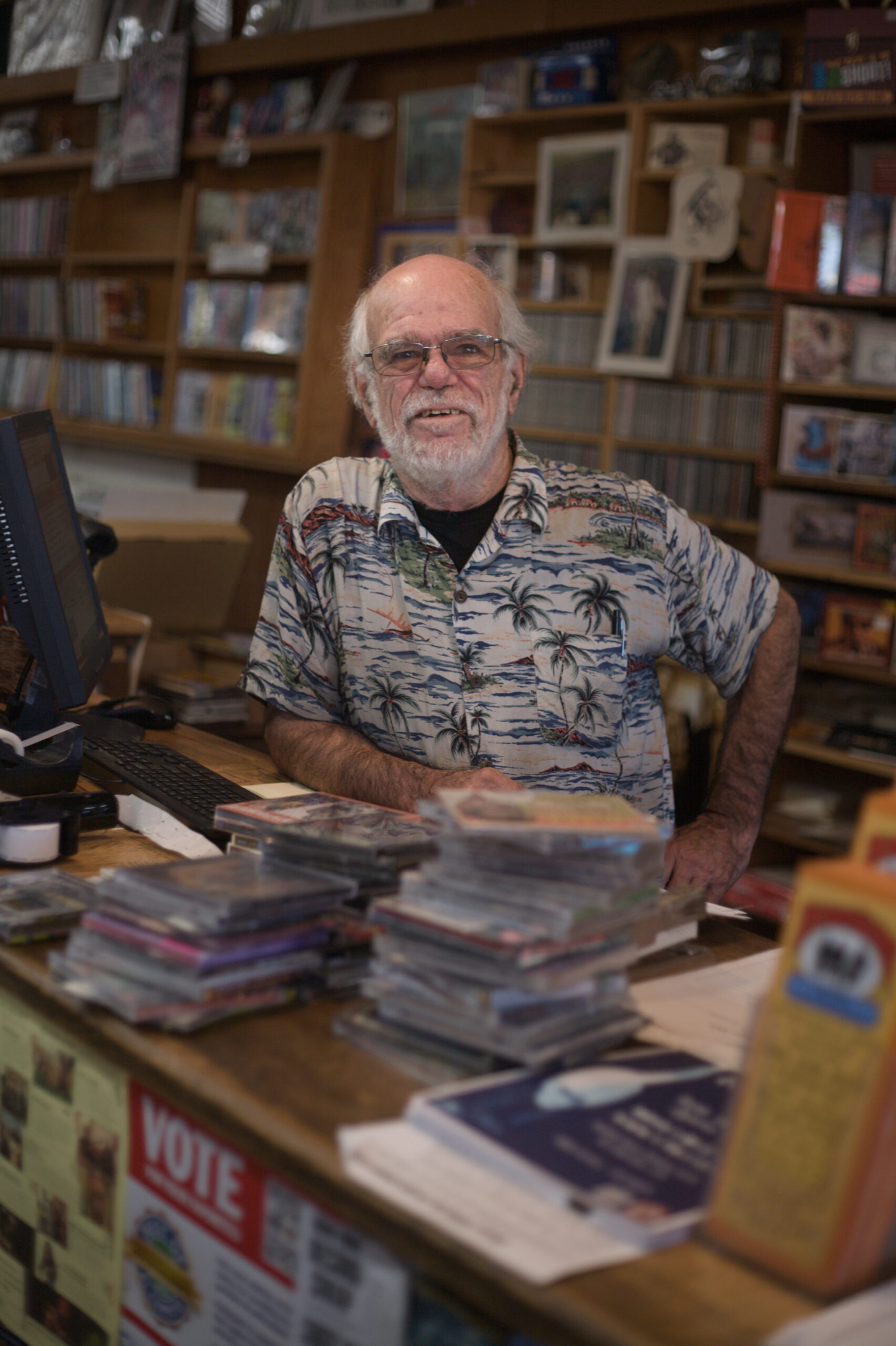
McCord has also been the store’s public face and institutional memory through all of it — quoted in nearly every piece of press coverage of the building’s recent troubles, and the person visitors are most likely to actually talk to when they walk in the door.
It’s worth saying plainly, as someone who runs a studio a few minutes away: John’s generosity extends well past the counter. He graciously made time to come record a handful of songs at Panama Sound, and one of those recordings will appear on our upcoming Pub Album compilation.
That kind of willingness — a man who has spent forty years being the steady hand behind one of the most important roots-music institutions on the West Coast, taking an afternoon to sing into someone else’s microphones — says as much about the culture Strachwitz built as any catalog number does.
It’s the same ethos Down Home has always run on: music first, ego optional.
Chris Strachwitz personally owned the San Pablo Avenue building that housed Down Home Music, Arhoolie’s offices, and Les Blank Films for nearly fifty years, and his death in May 2023 put that arrangement on a clock.
His will granted Les Blank’s son, filmmaker Harrod Blank, a first right of refusal to buy the property, but in October 2024, the Strachwitz family trust announced it planned to put the building on the open market, and all three tenants — Down Home Music, the Arhoolie Foundation, and Les Blank Films — publicly acknowledged they could lose the space that had defined all three organizations for half a century.
Harrod Blank exercised his option in partnership with the Arhoolie Foundation, and the two nonprofits went under contract on the property in November 2024, putting down 10 percent earnest money on an appraised purchase price of roughly $2.4 million, with a deadline in the spring of 2025 to raise the balance. A public GoFundMe campaign — shared across all three organizations — drew more than 300 donors and roughly $67,000 on its own, much of it arriving in a rush of year-end tax-deductible giving.
But the deal was ultimately closed thanks to one major donor whose identity and exact contribution Harrod Blank has kept private, calling the gift the thing that let the purchase clear the finish line.
By mid-2025, the sale was complete: the Arhoolie Foundation and Les Blank Films are now co-owners of the building, with Down Home Music remaining as tenant — a “marriage of the three entities,” as Blank put it, formalizing a relationship that had operated informally for fifty years.
One complication remains unresolved: much of Down Home Music’s retail inventory technically passed to Strachwitz’s heirs along with the rest of the estate, and the store is still working out whether and how to purchase that inventory back at what Blank has described as an unexpectedly steep appraised value.
With ownership secured, the three organizations are already leaning into what the building has always done best: functioning as a live venue and community gathering space, not just an archive and a retail counter.
Down Home has hosted informal in-store sets for years — Taj Mahal has dropped in to jam, and performers including, Johnny Otis and Peter Rowan have played there over the decades — and McCord and Blank have both talked openly about expanding that programming, with more scheduled live music and Harrod Blank, a filmmaker himself, pushing to bring regular film screenings into the mix.
Down Home Music also continues to anchor community events like the El Cerrito Free Folk Festival, hosting preview performances in its own space ahead of the annual festival.
It’s genuinely hard to overstate what this building represents for the region. Technically, Down Home Music sits in the city of Richmond — the sidewalk out front is El Cerrito’s, the storefront is Richmond’s — which makes it a fitting, almost literal symbol of an East Bay music culture that has never much cared about municipal boundary lines.
For El Cerrito, it’s one of the only surviving links to a moment when the town was a real node in the national roots-music map. For Richmond and the wider East Bay, it’s proof that an independent, artist-first business model can outlive its founder if the community around it decides it’s worth fighting for.
For the Bay Area more broadly, it sits alongside a shrinking handful of institutions — record stores, small labels, listening rooms — that still treat regional and vernacular music as worth documenting on its own terms rather than optimizing it for a platform’s algorithm.
And nationally, Arhoolie’s catalog and the Frontera Collection remain foundational reference points for anyone studying American blues, Cajun, zydeco, or Tejano music — the kind of archive that university researchers, documentarians, and touring musicians alike still go back to, more than sixty years after a 250-copy Mance Lipscomb LP started the whole thing.
Support Independent Music
Down Home Music
Go Visit. Sign Up. Show Up. If you’re a new client of Panama Sound, a returning one, or just passing through the East Bay, put Down Home Music on your list.
It’s a short walk from the studio, the bins are deep, the staff — John and J.C. especially — actually know what they’re talking about, and every dollar spent there supports the same community fabric this whole studio operates inside of.
Sign up for their email list so you know when the next in-store set, screening, or Free Folk Festival preview lands, and if you’re in town when something’s happening, go. This is exactly the kind of independent, artist-first infrastructure that’s disappearing everywhere else in the music business — it survived because people showed up for it once already. It’s worth doing again.
A Small Postscript on Coincidence
I went to high school at MacGregor in Albany, a continuation school, and in the 90s I spent a fair number of nights at Berkeley house parties with a kid named Devin McDonald. Then one day he was in class with us. I guess, like me, he’d been transferred from regular high school for [reasons].
I had no real sense at the time that his last name meant anything beyond a name — he was just a friend, one more person in class, one more person at one more party. Though he had a big, zany personality, he was always laughing.
Devin is Country Joe McDonald’s son. The same Country Joe McDonald whose free living-room recording session with Chris Strachwitz in 1965 turned into a Woodstock-era anthem, funded the purchase of the Down Home Music building, and indirectly built the roof under which John McCord has spent the last forty-plus years.
Devin, for what it’s worth, grew up a few blocks from Mr. Mopps’ Toy Shop on Martin Luther King Jr. Way, fell for the place as a kid, and bought it with his partner Jenny Stevenson in 2010 when it looked like it might close for good — he’s been running it, and raising his own family, ever since.
I don’t know what to call a coincidence like that beyond just naming it. A regional record label funded in part by a song written by a man whose kid I used to hang around with as a teenager, in a building five minutes from a studio I’d end up owning thirty years later, staffed by a man generous enough to come sing into my microphones for a record I’m putting together right now. Call it a small town, call it the East Bay being smaller than it looks, call it serendipity or providence or nothing at all — but it’s the kind of throughline that makes me want to keep paying attention to where I actually live, and who’s actually in it.
Logan Byrne
The Independent Artists Guide
Richmond, CA—Your step-by-step roadmap for navigating the modern music landscape on your own terms.
Releasing music as an independent artist means wearing every hat, from sound engineer and visual director to distribution manager and marketing strategist. This hub keeps growing — check back occasionally for new parts.
I do a few things here: I record; I mix; I hand off. The rest is completely up to you. It can be daunting—that’s why I’ve created this series.
From the moment your masters are in your hands, the rest is yours to run — copyright, distribution, marketing. Pushing hard for your record’s visibility isn’t selling out; a killer track nobody hears helps no one. Treating the release like a business is the highest compliment you can pay the art. This guide is where you start.
Nine-Part Guide
In This Series
Nine standalone guides covering everything that happens after you leave the studio — rights, strategy, storefronts, distribution, playlisting, physical media, radio, and live shows.
- Part 1 Protect the Work: Copyright Basics
- Part 2 The Waterfall Release Strategy
- Part 3 Building Your Own Storefront
- Part 4 Bandcamp: Direct to Fan
- Part 5 The Search for the Right Distributor
- Part 6 Playlisting: What It Actually Takes
- Part 7 Physical Releases
- Part 8 Community & Freeform Radio
- Part 9 Live Shows & Fan Loyalty
Logan Byrne
Douglas Benson, The Desert Stranger
Richmond, CA—I met Douglas Benson outside the Ivy Room in the Spring of 2026, before any of this started.
He’d just finished opening for Mitch Polzak and the Royal Deuces, playing for maybe thirty people who weren’t paying much attention.
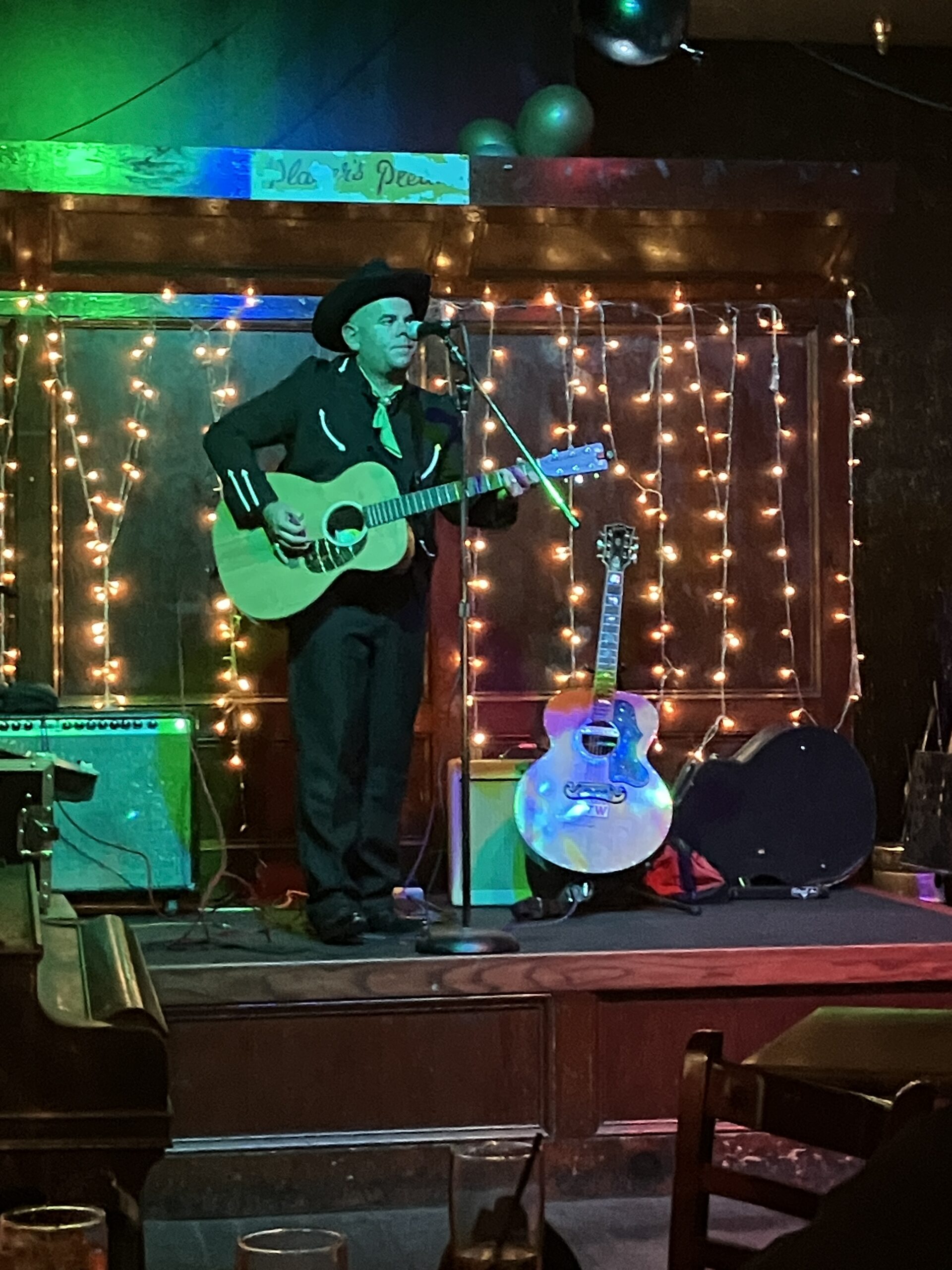
It didn’t matter. He played that room like it was a sold-out arena of ten thousand people who’d come just for him.
That’s the whole thing about Doug — the audience size has never once changed what he gives them.
I told him I had a studio. I asked him to come down. I didn’t expect him to say yes. I didn’t think much of it because this is The Bay Area and people talk a good game but they’re just as likely to flake as not.
My Good Friend, Logan
Before we’d ever recorded a note together, Doug did a live broadcast on KXSF.
I was at home, listening and recording, no idea what was coming. At some point, completely apropos of nothing, he introduced me to the DJ on air as “my good friend, Logan” — and called out the studio and Richmond along with it.
We’d met exactly once, outside a bar, after a short conversation. He didn’t owe me that. I had to pick my jaw up off the floor.
The next day I drove into the city for his show and brought him a Panama Sound t-shirt — probably a size or two too big, if I’m honest.
Punk Rock, Hank Williams, and Low Riders
Douglas has been playing punk rock most of his musical career, and like he said on the radio, punk is just country sped up. So it was natural for him to slow down into country music, but here’s the catch:
Western, Not Country
He followed through on the studio, too. A few weeks later he was standing in my living room in Richmond, ready to work.
Doug is insistent on one distinction: it’s not country, it’s western. Country has Nashville in its bones. What Doug writes and sings comes from somewhere else — a desert landscape he describes as magic from the ground to the sky. A windblown border town in Arizona.
You can hear that in the songs: wide open, a little haunted, built for a horizon across a dashboard.
LB: When did you get started making music?
DB: I started playing violin in elementary school.
LB: What instruments do you play?
DB: Violin, guitar, banjo, bass, drums,
LB: When did you start writing songs?
DB: Wrote my first song when i was 14.
LB: Why did you start writing songs?
DB: I knew I didn’t want to be in a cover band or a band that did a lot of covers, so… I wrote my own stuff. [I] have kept that mindset to this day.
LB: How do you recognize an idea as a song?
DB: A melody or line will pop into my head, i won’t be able to shake it until it’s done and written.
LB: Where did you grow up?
DB: Born and raised in california, deep east bay, ANTIOCH! but spent quite a bit of time in Arizona as a kid, way south east in the Sonoran Desert.
LB: How did that influence your music?
DB: Growing up in Antioch: I was a chicano rockabilly kid that listened to punk rock, rockabilly and drove a low-rider. i think most people thought I was from space. I was fine with that. spending time in Arizona, i just really soaked in all that heat and magic out there. it all translates somehow.
LB: What music or scene did you fall into or what attracted you?
DB: Rockabilly, psychobilly and punk rock.
LB: What was unique or idiosyncratic about your musical taste?
DB: I’d have to thank my parents here. they have the most epic vinyl collection. One day it’d be classical, the next Motorhead, and everything in between. I think that’s the best way to be.
LB: What bands did you form or play in?
DB: I started stigma 13 when i was 15, and that band is still goin’ today. Big time punk rock n roll. I’ve been doing my western project for about a year and I’ve been having a lot of fun with it.
LB: Are there websites, bandcamp, spotify, or youtube links you would like to share in regards to your previous punk rock bands?
DB: There’s some stuff on youtube if you dig for stigma 13, but we’ve always been a live band and that’s the best place to see and hear us.
LB: What drew you to Western music? Why did you stop playing punk rock?
DB: Western music and punk rock are kinda one and the same to me. It’s all about existing outside of the regular confines of society. I think that’s what I dig most about it all.
LB: Where were you when you were first inspired to play Western music?
DB: I donno if there was ever one time where it was like some kind of lightening bolt… it’s always kinda been knocking around in there. I do see it like a movie though. the songs are the soundtrack.
LB: Why were you inspired?
DB: I think with any of my music projects, i just wanna write the songs i wanna hear. it’s as simple and as complicated as that. haha
LB: Who are some of your Western influences?
DB: tuco. bob dylan. george jones, hank williams sr, lefty, spaghetti westerns, townes, louvin brothers, harry mcclintock…too many to list
LB: What are you doing nowadays mostly?
DB: workin, bein dad, and writing music. it’s a good life.
LB: Where can people see your show?
DB: just gotta keep an eye on the horizon for the desert stranger
LB: What are your favorite venues to play/places to hang out?
DB: i don’t think ive ever had a bad time playing anywhere, im just happy to play anywhere that’ll have me!
LB: Where can people find a schedule of your shows?
DB: check the instagram, i post a lot of junk there
LB: Anything in the works?
DB: well, as it would turn out i’ve done some recording at panama sound, and wanna get a few more songs in the can!
LB: Are you planning a release?
DB: yep! working on it!
LB: Do you, or would you like to collaborate with other musicians?
DB: always
LB: What are your favorite and least favorite parts of the music business?
DB: it can be clique-y at times and that’s lame as fuck. there’s enough room for everyone if ya ask me.
LB: What do you think it’s all for?
DB: shit, i ask myself that daily. let me know if anyone else figures it out.
LB: Why do you keep doing what you’re doing?
DB: simply put, because i can’t not.
LB: Any advice for new musicians just coming up in the game?
DB: buckle up and have fun. don’t take shit too serious.
LB: Anything else you’d like to add?
DB: i think we all need to sit back and take a deep breath. think long and hard about the things in life that really matter. we can feed the hungry, and we can house the poor. the sky is gonna be blue tomorrow wether we’re here or not, so we might as well enjoy it all with eachother.
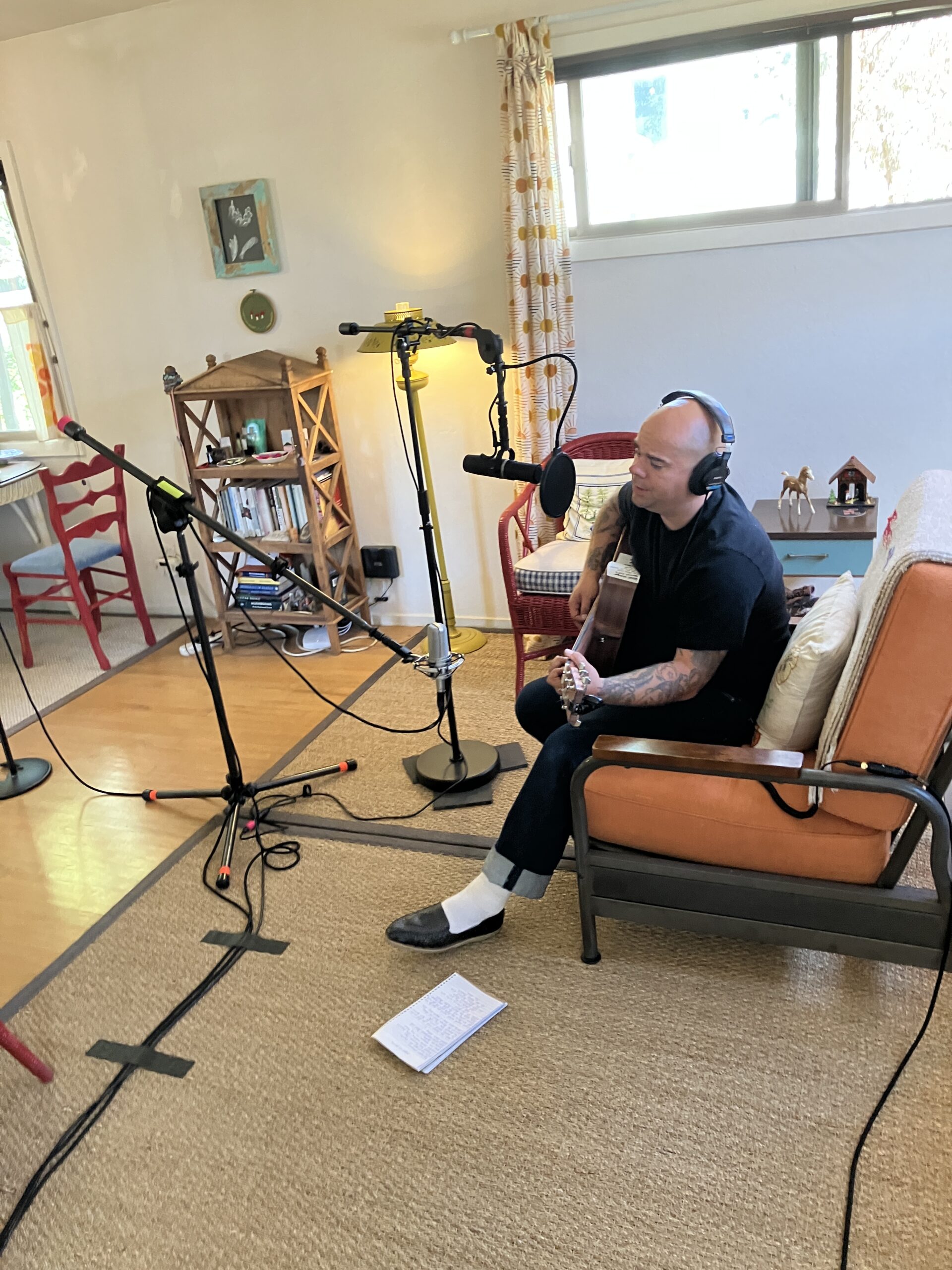
Eight tracks in a single six-hour session. No overdub marathons, no sanding off the rough edges — just Doug, a room, and the songs as he actually plays them live. That’s the only way to record someone whose whole gift is presence. You capture it, you don’t fix it.
That’s my good friend, Doug, start to finish — the guy who’ll play like the room is packed when it’s not, give credit on the radio when nobody’s asking him to, and show up to make good on a promise to a stranger outside a bar.
We’ll point you in the right direction when he releases his new album.
Logan Byrne
Getting Play on Local Radio Stations
Richmond, CA—Reaching out to a freeform radio DJ can be a powerful move, but it requires a personal touch.
Part 8 of 9 — The Independent Artists Guide
Freeform radio is built on trust, passion, and organic discovery, so your goal should be making a real connection with the host rather than treating them as a broadcasting utility.
That starts with being an avid listener long before you send a pitch — freeform DJs take real pride in crafting unique sonic journeys, so take the time to understand their curation style and programming quirks, then reference specific tracks or moments from recent shows when you reach out, to prove your music genuinely fits the tapestry they weave each week.
Supporting the station financially, whether through a donation or a pledge drive, matters too — most of these stations run on tight budgets and community backing, and showing up as a donor signals that you’re an invested member of the musical community rather than someone just chasing free promotion.
The Bay Area, and the East Bay in particular, has long been a stronghold for this kind of independent, listener-supported radio — an antidote to algorithmic playlists and corporate syndication, built on curation, political independence, deep-cuts, and community representation.
KALX 90.7 FM, broadcasting out of UC Berkeley, is the cornerstone of the scene: student and community DJs are required to mix genres within their own shows, so a single broadcast might move through avant-garde soundscapes, vintage country, post-punk, and global percussion.
KXSF 102.5 FM carries on the tradition of the old KUSF, a low-power San Francisco signal that reaches the East Bay waterfront with eclectic mixes of punk, soul, garage, ambient, and experimental sound.
KZSU 90.1 FM broadcasts from Stanford but reaches well into the East Bay, with a schedule shaped entirely by host preference — vinyl deep-dives, sound collage, underground hip-hop, and overlooked indie releases.
KPFA 94.1 FM, founded in Berkeley in 1949, was the first listener-supported community station in the country, and while it’s best known for grassroots news and left-leaning political programming, its evening and weekend slots hold a rich freeform music tradition spanning reggae, African and global sounds, blues, avant-garde classical, jazz, and local hip-hop.
KFJC 89.7 FM, licensed to Foothill College, carries a strong signal across the Bay and has built a reputation on uncompromising programming — live in-studio sets, drone marathons, and obscure underground releases.
KPOO 89.5 FM, the first Black-owned non-commercial station west of the Mississippi, centers its programming on blues, reggae, jazz, funk, gospel, and hip-hop, all hand-curated by its hosts. KWMR, out of West Marin, reaches parts of the East Bay along the shoreline and elevated ground with a blend of acoustic roots, ambient electronics, world music, and spoken word.
And KEXP‘s Bay Area signal at 92.7 FM offers commercial-free, genre-fluid programming with dedicated showcases for local Northern California musicians.
If you’re out of FM range, BFF.fm streams community-backed freeform shows and local interviews out of the Mission District, and Radio Valencia offers independent internet radio built around local DJs spinning vinyl. That’s the list — not exhaustive, but a solid starting point. Pick one you can receive well, start listening, and go from there.
Logan Byrne
Building Your Own Storefront
Richmond, CA—Control the relationship with your fans.
Part 3 of 9 — The Independent Artists Guide
You can write the songs, record them, own the masters, and release them entirely on your own terms. And then someone actually wants to buy the record — and by default for some reason, you hand that transaction to somebody else.
Distribution and commerce aren’t the same thing. The music, the storefront, the payment processor, the customer relationship, the email address, the fulfillment, the money — none of those have to live with the same company. Part 2 covered how your record moves. This is about where the money, and the relationship, actually land.
Why Bother Owning the Storefront? Not because you’re going to sell ten thousand copies. Not because you’re secretly building the next Shopify. A storefront gives you a direct economic relationship with people who already care —your fans: you set the price, sell lossless files or bundles or pay-what-you-want, and collect the email address of someone who’ll actually show up to a gig — without asking an algorithm’s permission first.
Most importantly, you own the address. The domain, the mailing list, the catalog page, the customer data — none of it sits inside somebody else’s platform, subject to somebody else’s terms of service.
A $10 digital album at a typical Stripe rate (2.9% + $0.30) nets you about $9.41 — call it 94%, before hosting, domain, taxes, or refunds. The number that actually matters isn’t the percentage. It’s the fixed $0.30: it eats a much bigger bite out of a $5 download than a $20 one. The real case for owning your storefront was never the six or eight points you save over Bandcamp. It’s control over the storefront, the pricing, the customer relationship, and the asset underneath all of it.
Square is another widely-used payment processor, but I haven’t had direct experience with it.
You don’t have to build a website of course. If the words WordPress, WooCommerce, and Stripe make you want to walk the other way — good news, you don’t have to do it all yourself:
| Platform | Control | Ease | Fee | Music-Specific |
|---|---|---|---|---|
| Your own (WordPress / WooCommerce) | Very High | Low | ~0% + processing | No |
| Payhip | Medium | Very High | 5% on free tier | No |
| Ko-fi | Medium | Very High | 5% shop fee | No |
| Big Cartel | Medium/High | High | 0% digital + processing | No |
| Mirlo | High | High | Artist-set | Yes |
| Ampwall | Medium/High | High | 5% + processing | Yes |
| Bandcamp | Medium | Very High | 15% digital | Yes |
Payhip and Ko-fi both describe themselves as bootstrapped and independently run. Mirlo is worker-owned and open-source, letting artists set their own contribution back to the platform. Ampwall is a public-benefit company built specifically for independent music. None of them require you to touch a line of code — and Bandcamp needs no introduction. It gets its own part in the series next.
I built panamarecords.com from scratch because I like building things, not because it’s the correct answer for every artist. If you’d rather spend six hours writing a song than six hours debugging a checkout plugin, take one of the platforms above and don’t look back — that’s not failure, that’s knowing where your time is worth something.
The system itself sits on four separate pieces, each doing one job. Hostinger handles domain registration and hosting — the ground floor everything else sits on, and the part that determines whether your site is even reachable when someone clicks a link. WordPress is the website software itself, the layer that actually renders pages and handles content, backed by official documentation plus a massive independent tutorial ecosystem built up over two decades. WooCommerce sits on top of WordPress and turns it into an actual store — product pages, cart, checkout flow, order management — with its own extensive official documentation and no shortage of third-party courses. And Stripe handles the part that matters most, the actual movement of money: payment processing, receipt generation, and the developer docs are thorough enough to work through even if you’re not a developer.
Before any of it went live, I ran it through Stripe’s sandbox mode start to finish — a fake purchase, a fake download, verifying the receipt email, verifying the file that arrived, verifying the money landed where it should, and only then flipping it over to live. Test it exactly the way a stranger with a credit card will use it, because eventually one does.
Domain registration, WordPress, WooCommerce, and Stripe are each their own rabbit hole — any one of them is a book, a course, or an entire website’s worth of material on its own, and fully covering any of them is out of scope here. If you want to go the difficult-but-rewarding route, there’s real documentation, and no shortage of books and video walkthroughs, for each of them: Hostinger, WordPress, WooCommerce, and Stripe.
Someone buying a $10 album is nice. Someone buying it and opting into your mailing list is a person you can reach for years — at shows, on new releases.
A storefront isn’t an afterthought though. Every bit of control you take on is a maintenance job and a deep-dive you didn’t have before: security and updates, backups, broken links, expired cards, hosting bills, domain renewal, refunds, tax obligations, and whatever privacy law applies to wherever your customers live. The more you own, the more you’re responsible for.
Keeping 94% of $0 is worse than keeping 85% of a sale you wouldn’t have made otherwise.
Bandcamp brings discovery, an existing audience, and buying behavior your own domain doesn’t have on day one. Sometimes the bigger cut is the right trade. This was never control versus convenience — it’s control, convenience, discovery, and community, weighted differently at different points in a career.
Your own storefront, Bandcamp, a distributor, an email list, live shows — none of them compete with each other. They’re different rooms in the same house, and every one of them should point back to you. Layer them instead of choosing one.
The goal was never “I built an ecommerce website.” It’s a place where someone who already cares about your music can support it directly. The storefront isn’t the relationship — it’s the infrastructure that makes the relationship possible. Bandcamp, next, is the other half of that.
A general note on the links throughout this article: Panama Sound isn’t affiliated with, sponsored by, or endorsing any of the companies or tools mentioned here. Pricing, features, and ownership structures change — what’s accurate as of when this was written may not be accurate when you read it. Do your own research before you commit money, data, or your catalog to any third party.
Logan Byrne
How I Learned to Listen
Richmond, CA—Listen closely.
You don’t choose your childhood soundtrack any more than you choose your childhood weather — you just end up permanently damp in some particular way, and later in life you call that damp thing your taste, your aesthetic, whatever. Mine started in a courtyard.
I grew up in UC Village (called “Married Student Housing” back then) in Albany — a large WWII-era apartment complex tract. The eight-unit apartment buildings were made of stucco, asphalt, and the general architectural ambition of a tall rubber boot. There were courtyards between them.
Every morning, the neighborhood kids were released (kicked out) and not expected back until the streetlights came on – not an uncommon Gen X experience.
My friend and I would sit in that courtyard for hours, letting it echo Beatles and Beach Boys harmonies back at us off the stucco. That same year my parents handed me my first LP for Christmas: The Planets composed by Gustav Holst, as conducted by William Steinberg. I played it so many times. I didn’t understand orchestras yet. Also Sprach Zarathustra was on side B, but I didn’t care much for it. I just knew that Mars sounded like it was mad at somebody, and I wanted to know who. Jupiter put images in my head like a coronation ceremony taking place on a grand flotilla, et cetera.
This is where the habit started — sitting with a whole album, start to finish, no skipping, no multitasking. Not because it was noble. Because I was eight years old and didn’t yet know you were allowed to leave the room. Besides, there was no scrolling back then, and nothing better to do than listen to music.
At age nine we moved up into Kensington, which traded the flat concrete openness of the Village for trees and fog. The courtyard noise was gone, and unfortunately so were my friends in the courtyards. In its place: trees, silence, mist, and a house with big living room window. Outside, in the front yard, a giant redwood sequoia tree, which in my memories was almost always shrouded in the fog. Naturally, I turned to radio.
By ten I was in the living room working the far-left end of the FM dial on that old JVC receiver, hunting for stations at hours when my parents were gone or when I should have been asleep. KPFA drifted through occasionally — My home was 90.7, KALX Berkeley, a station apparently run on the principle that no two songs should ever be allowed to resemble each other.
In a single shift you could get dub from Jamaica, pulsing techno, unhinged da-da sound collage, krautrock, noise that sounded like a fax machine having a nervous breakdown, and post-punk so gloomy it needed its own umbrella. It was chaos with a program schedule. And somewhere in there, my ear quietly rewired itself to expect texture and contrast instead of just “the pretty part.”
My dad had a hi-fi system, and a part of that system was a dual cassette deck which was like an altar to me. I’d clamp on his enormous 1970s aviator headphones — the kind that make you look like you’re about to receive instructions from air traffic control — and sit there for hours with a finger hovering over Pause and Record.
I’d grab stuff straight off the radio and splice it in next to songs from my dad’s record collection, learning sequencing and pacing entirely by accident, the way you learn to ride a bike by falling off it repeatedly in a garage when nobody’s watching. By high school I had a stack of these homemade mixtapes that made sense to exactly one person on Earth. Those tapes weren’t just music to me, they were survival.
My first cassette purchase, at just 13 years old for a whopping $7.99, was Chick Corea and Return To Forever’s Romantic Warrior — a tape I bought with my own money and played until the tape wore thin, not because I understood it (which I absolutely did not), but because it was the only non-dubbed tape I owned and so I had no choice but to listen to it over and over until it gave up its secrets, or until I grew enough ears to receive them, which took years. Romantic Warrior is a remarkable record — the fusion of jazz virtuosity and synthesizer architecture and harmonic ambition is unlike almost anything else from that era, Herbie Hancock’s Sextant surpasses it fundamentally —because it asks a different question — but Romantic Warrior was, and still is a fine album.
What that early Corea tape gave me, though I couldn’t have articulated it at the time, was a tolerance for complexity — a willingness to sit with music that didn’t immediately resolve into something familiar, to keep returning to a thing I didn’t yet understand because some part of me recognized that the not-understanding was the point, that the music was larger than my current capacity to receive it and that the gap between us was an invitation rather than a rejection.
My second cassette purchase at 14 was The Land of Rape and Honey by Ministry. I was embracing industrial music especially Front Line Assembly, Tactical Neural Implant was my favorite album by them. It gave me post-apocalyptic visions of a future where humans were hunted by autonomous cyborgs. This was cold, hard electronic music and suited my angst-ridden teen years just fine. My body was in the world but my mind was anywhere else. It was an escape to another dimension – a scary one.
I’ve always peered into the darkness of the human soul, out of morbid curiosity I guess. Maybe to shock my system, the same way some people like wasabi on their sashimi. It’s REALLY terrifying what we are capable of in large groups as a society. All this as the Internet was gaining popularity, I had seen The Terminator as a kid and the idea of it sent me reeling. I had always suspected it was predictive.
Ironically, and not heeding the warning, here we are 40 years later systematically bringing that grim, dystopian fiction into existence, so it seems.
There are so many musical detours I took as a youngster. Even now I’m still discovering new music, constantly. I could go on forever. I’ll cut it short but some day I may return to forever. I was just a kid in some fog, turning a dial that never went past 94.1, trying to figure out why certain sounds stuck to him and others slid right off.
But that’s sort of the whole idea: your ear doesn’t get built in a studio. It gets built by accident, out of whatever circumstances you happen to grow up in. But, it also depends on your personality, your curiosity and whether you like to seek out new things or prefer the comfort of something familiar. I’m all over the map, musically.
For me personally, music went so far beyond a mere escape, it built entire worlds inside my head and colonized them.
I listen widely, and carefully. My listening style favors texture over virtuosity, and raw emotion over perfection. That’s just me, it’s not right or wrong, good or bad, it’s just my taste – and that’s a beautiful thing. Everyone’s taste is different, like a flower, and there’s room in this world for all of it.
I encourage everybody to be curious and listen widely, listen consciously and with intention. What images does the music conjure in your head? Think about the artists, what were they thinking when they made the album you’re listening to?
Look up different musical traditions on Wikipedia, turn your radio on and tune in to the left side of the dial, By that I mean freeform, listener-supported radio. Support live music, and get out of your comfort zone, go to a show you wouldn’t normally choose. You may surprise yourself.
Logan Byrne
The Wire Between the Stacks
Richmond, CA—For roughly forty years, from 1960 into the early 2000s the San Francisco Bay Area ran one of the most complete independent music ecosystems in the country.
I recently wrote an article on Arhoolie, Downhome Records, Chris Strachwitz’s legacy and what that meant and was worth to the Bay Area and the Nation at large. Scratching just slightly deeper, I remembered (realized?) that Arhoolie and Downhome were just pieces of a larger, independent music network in the Bay Area.
It wasn’t one company or one scene. It was an amalgamation of small operations with overlapping mission statements and personnel working simultaneously, sometimes together, sometimes in parallel. That network consisted of certain record labels, mail-order distributors, and freeform radio stations. It is still relevant today.
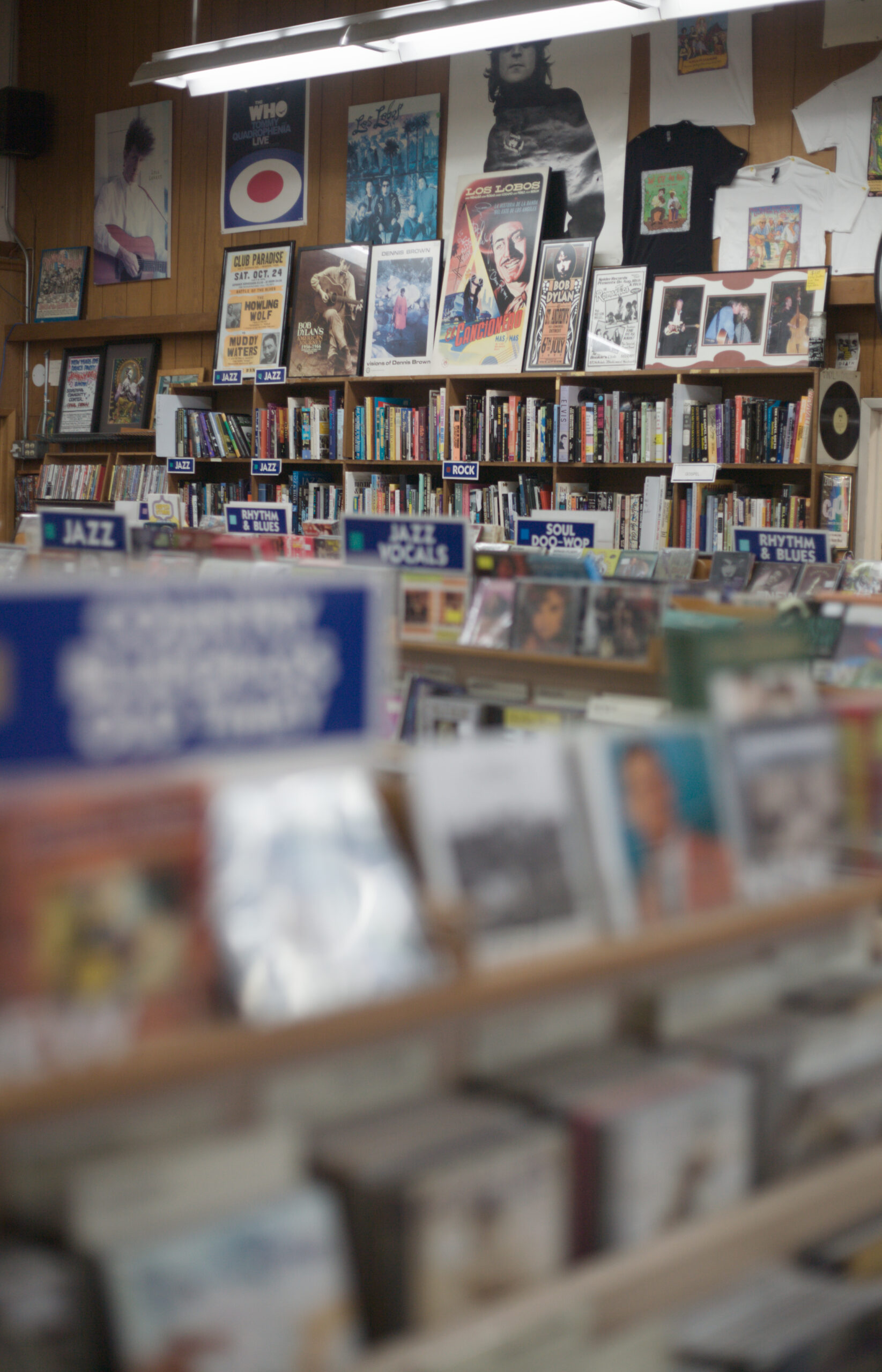
None of these businesses were large, just a handful of people, a rented storefront, or office. All of them matter more than their size would suggest because they built the infrastructure for independent music to be consumed and heard – music that sometimes had been recorded live in a ramshackle house with one microphone and a field recorder.
The Original Independent Network
This informal independent music publishing and distribution network in the Bay Area included such institutions as Arhoolie, Roots & Rhythm, Backroom and Bayside Record Distribution, Kaleidoscope Records, Village Music, Mordam Records and more.
Each of which could have a book written about them – I’m not diving too deep in this article. But I would like to let you know that I am currently interviewing Bob Coffino who was close to Tom Diamant and John McCord of Downhome has agreed to be interviewed at some point. I will post more specifics after I transcribe and edit what I’ve learned.
Music Discovery
Additionally, people discovered this independently published and released music through freeform, and community radio.
Stations that played and play this independent music included KPFA, KALX, KZSU, KUSF/cloned and reanimated as KXSF in 2017, and other historical low-power stations like Radio Sausalito. A development in the last 20 years has been the proliferation of freeform digital streaming stations.
I have a whole ‘nuther article planned that focuses on freeform radio and digital streaming stations in the Bay Area.
Live Music
Now, I probably don’t need to say this for most of you readers, but: absolutely none of this matters as much if you’re not out there getting gigs and playing live.
Becoming a regular, talking to booking agents and promoters, developing a circuit, growing an in-person following and going on tour is an organic process that’s not really replaceable by the methods above, or any method. Beyond that, the merch table is the most direct-to-fan piece of technology at your disposal. Venues like the Ivy Room, Ashkenaz, Freight and Salvage and many others have been instrumental.
Digital Publishing & Distribution
The digital music publishing and distribution landscape is a bit different, it is flooded with options.
It’s difficult to know where to even begin. As a recording artist, when you sign up with a digital distributor it seems like you have to balance discoverability against independence – a terrible compromise. On top of that, there are not many ethical, artist-first companies in this space. Very few, and fewer still that are locally-based. That’s why I’ve written several articles on the subject, to help guide artists new and veteran alike through this digital quagmire.
Digital Publishing Does Not Replace the Analog Methods
Here’s something I want to be direct about, because I think it’s easy to get this backwards: none of this replaces record stores, labels, archives, foundations, or freeform radio. It runs alongside them.
An independent digital release, done well, is a business card — a good one, professionally made, worth handing to the right person. But a business card isn’t the business. It doesn’t archive anything. It doesn’t put a record in a bin next to five decades of context the way Down Home does. It doesn’t put a stranger’s music on the air next to something they’d never have chosen themselves the way KPFA or KALX can. It doesn’t hold a rare pressing in trust for the next fifty years the way the Arhoolie Foundation does.
A digital upload is fast, cheap, and useful, and it is not a replacement for any of the institutions I’ve outlined in this piece. Anyone telling an artist otherwise is selling something.
Compounding Your Efforts
Here’s the thing though, none of this runs in isolation.
None of these channels should be used to the exclusion of the other. This stuff runs in parallel, and you as a recording artist can use all of it together simultaneously to gain fans, fame and fortune.
The Onus Is On YOU
The bad news is, to get your music properly protected, published and distributed still takes a lot of work.
If you are not signed (and since you’re still reading this you probably are not signed) to a record label, ALL OF IT falls on your shoulders.
I know. It’s a royal pain in the ass: I can almost hear heavy sighs through the screen. The good news is that we have modern conveniences to get most of it done now, online forms instead of fax machines, automated bank transfers instead of a yearly check. So cheer up.
Become an Advocate for Yourself
To be an effective advocate of your catalog, you need to use every tool (new and old) available to you, and use them in an informed manner.
The original independent music publishing and distribution network and the new digital one do not operate in isolation. Same with gigs. If you’re not covering ground with all three, you’re leaving something on the table.
I wrote several articles about the music publishing and distribution process and compiled them into a single hub on this site because the tools have changed completely while the underlying problem, getting music made by someone without a label or a marketing budget in front of people who’ll actually care about it, hasn’t changed at all. The guide walks through it in order.
Independent Storefront Release Coming Soon
I’m also building out a section I haven’t published yet,
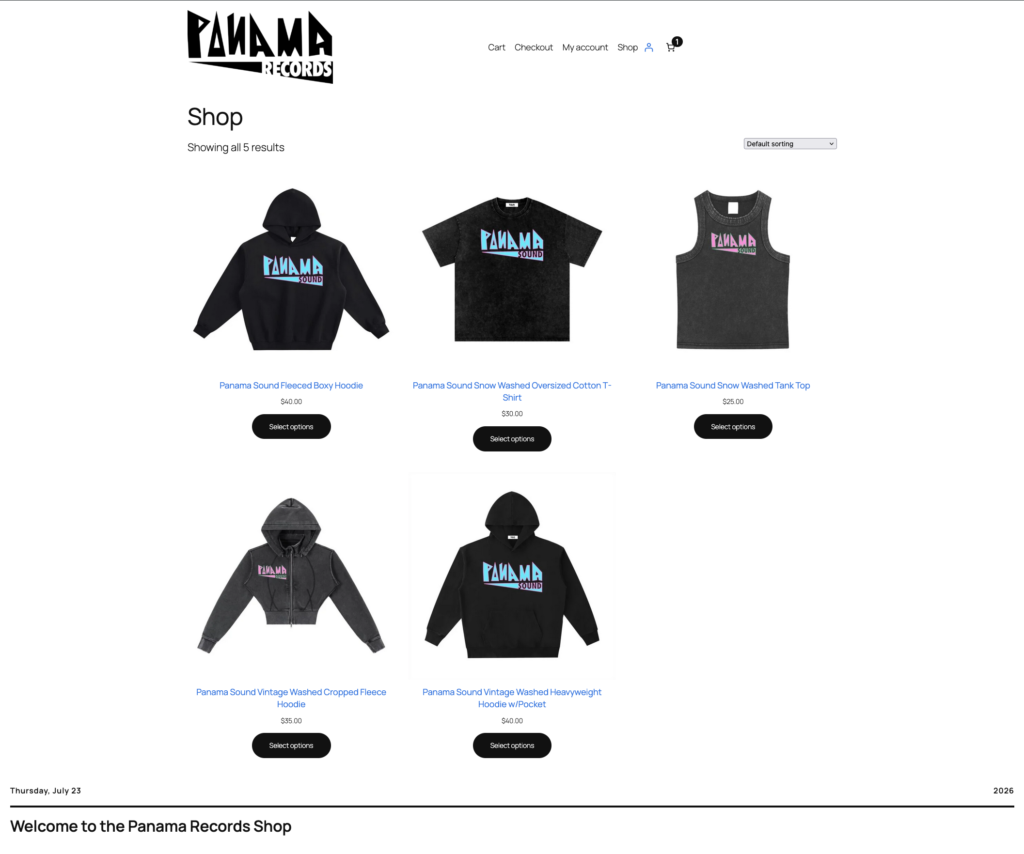
Independent Storefront Release, which will walk artists through actually owning their own digital point of sale — registering a domain, setting up hosting, running WooCommerce on WordPress, offering digital downloads, and connecting a Stripe account so a fan can pay the artist directly instead of routing every transaction through a platform that takes a cut and owns the relationship with the listener.
What I’m Looking For
I should also say plainly what I’m not chasing here, because it shapes everything above: I’m not especially impressed by global fame, and it’s not what Panama Sound is built around.
I’m interested in the person who books a session because they finally have four songs they’re ready to commit to, sometimes for the first time in their life.
I’m interested in the working musician who’s been good for twenty or more years and just hasn’t had the break, or maybe never will, and is making the record anyway because it needs to exist. That music — the kind poured into over years of practice in someone’s garage, cried real tears over, never widely heard and maybe never going to be is exactly the music I’m after.
Panama Sound isn’t a magic bullet and doesn’t pretend to be one. What I can offer is stewardship: record it properly, help the artist understand what happens to it next, and make sure it leaves the building in a form that respects the work that went into it.
Why Now?
Why am I pushing this now, from a studio that isn’t a label?
Because I think the gap between “make a great recording” and “understand what happens to it after you hit upload” is where a lot of independent artists — the bluegrass and acoustic musicians (lookin’ at you) I record most, especially — quietly lose momentum. They know how to play. They know how to gig.
Distribution, copyright, and release strategy are a second, unrelated skill set, and most working musicians have never had reason to learn it. Recording the record is my job. Explaining what to do with it afterward costs me nothing extra and saves the artist from learning it the expensive way.
To be clear about where I sit in all this: I’m not ready to be a label, and I’m not pretending to be one. Right now the arrangement is simple — I record it, I do some post-production when it’s called for, and I hand it off. That might change someday. It hasn’t yet.
Free Speech USE IT OR LOSE IT
I’ll also say this without much hedging, because it’s part of why any of this matters to me: I’m a staunch advocate for free speech, free thought, and free expression, and I think that’s inseparable from the argument for keeping this whole ecosystem alive.
We have it for now, it wasn’t given to us, we had to fight for it. We’re not guaranteed the right to free speech in the future. People don’t seem to realize that, and it’s mostly taken for granted.

A local record shop, a freeform radio station, and an artist’s own website all have something in common that a major streaming platform doesn’t: nobody can quietly change the terms on you overnight.
A platform can be bought out by a private equity firm or by a particular businessman with a particular agenda, and the rules an artist built their career on can change without warning, without a vote, and without recourse.
A record on a shelf, a song on freeform radio, a release on a website an artist actually owns — those are yours on your own terms. That independence is worth protecting for its own sake, not just for the music’s.
Hope for Independent Music
Is there still hope for independent music in an era of algorithmic playlists and a shrinking middle class of working musicians? I think so, and not naively.
The evidence is everywhere: Down Home Music is still open, still community-fundraised, still run by people who could tell you the label, the year, and the story behind almost anything in the bins. KPFA and KALX are still on the air. KXSF came back from a seven-year exile. Bandcamp, even with its recent debacle, remains one of the few major platforms where buying a record still sends most of the money to the artist. Many of the original venues are still going strong.
The tools for reaching an audience without a label have never been cheaper or more available to an individual musician working alone in a living room.
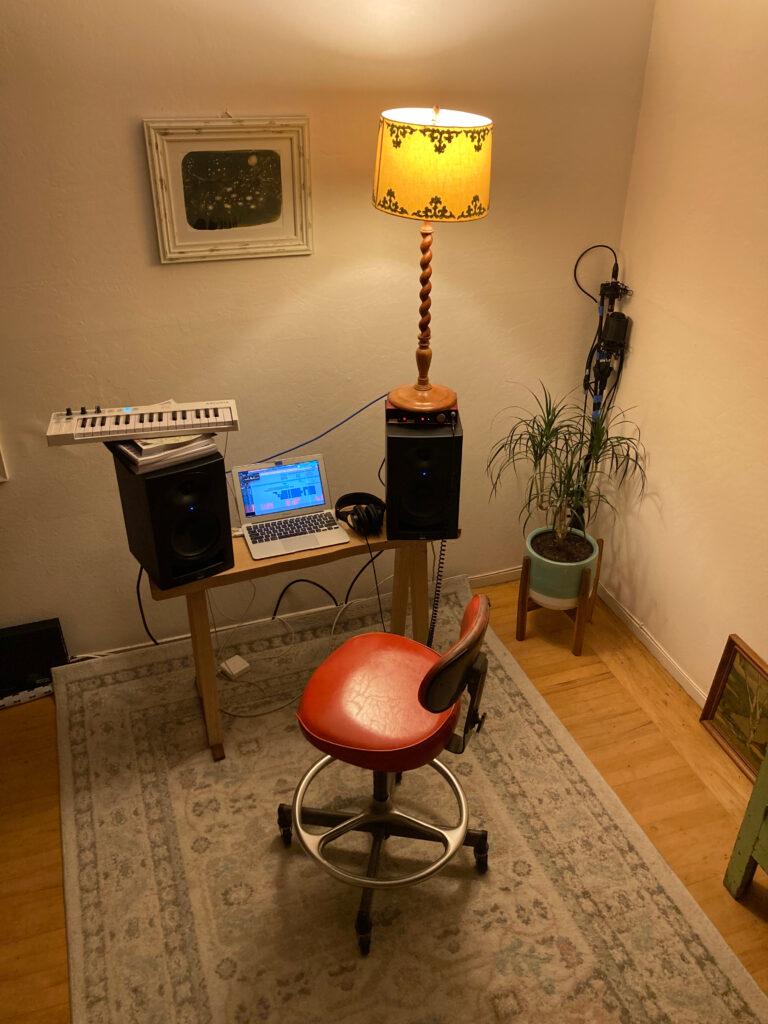
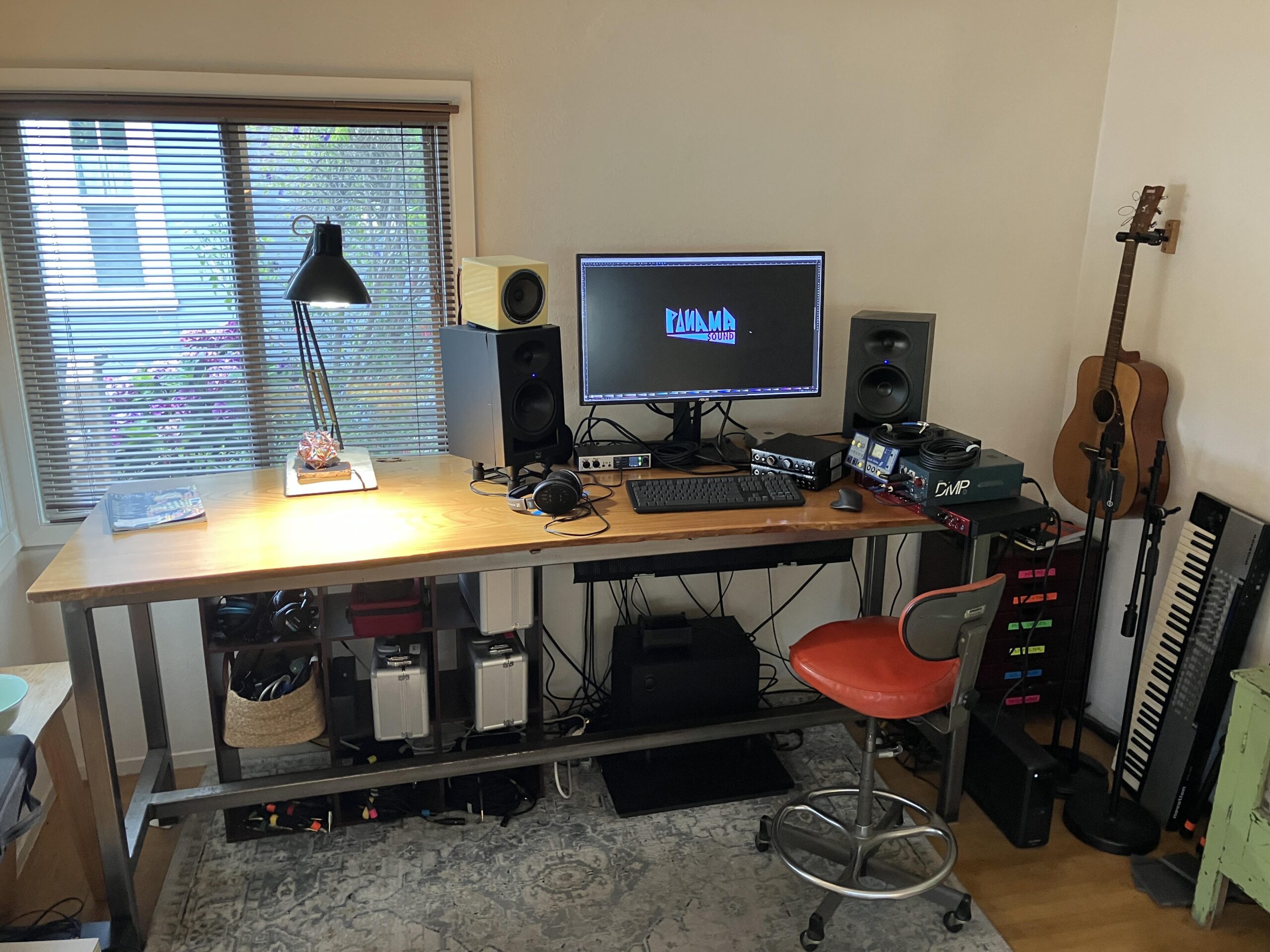
What’s required isn’t luck — it’s the same thing it’s always been: somebody willing to do the unglamorous work of getting the music out correctly, on terms nobody else can quietly revoke, and a listener on the other end willing to go looking for it instead of waiting for it to be handed to them. That’s been true since Strachwitz drove to Navasota. It’s still true now.